Can you drink the water on Easter Island?
Island sources disagree about the Hanga Roa tap, which tells you most of what you need. Here is what visitors actually drink, and why hydration matters here.
 By Pedro Pakarati, Rapa Nui tour guide and archaeological specialist
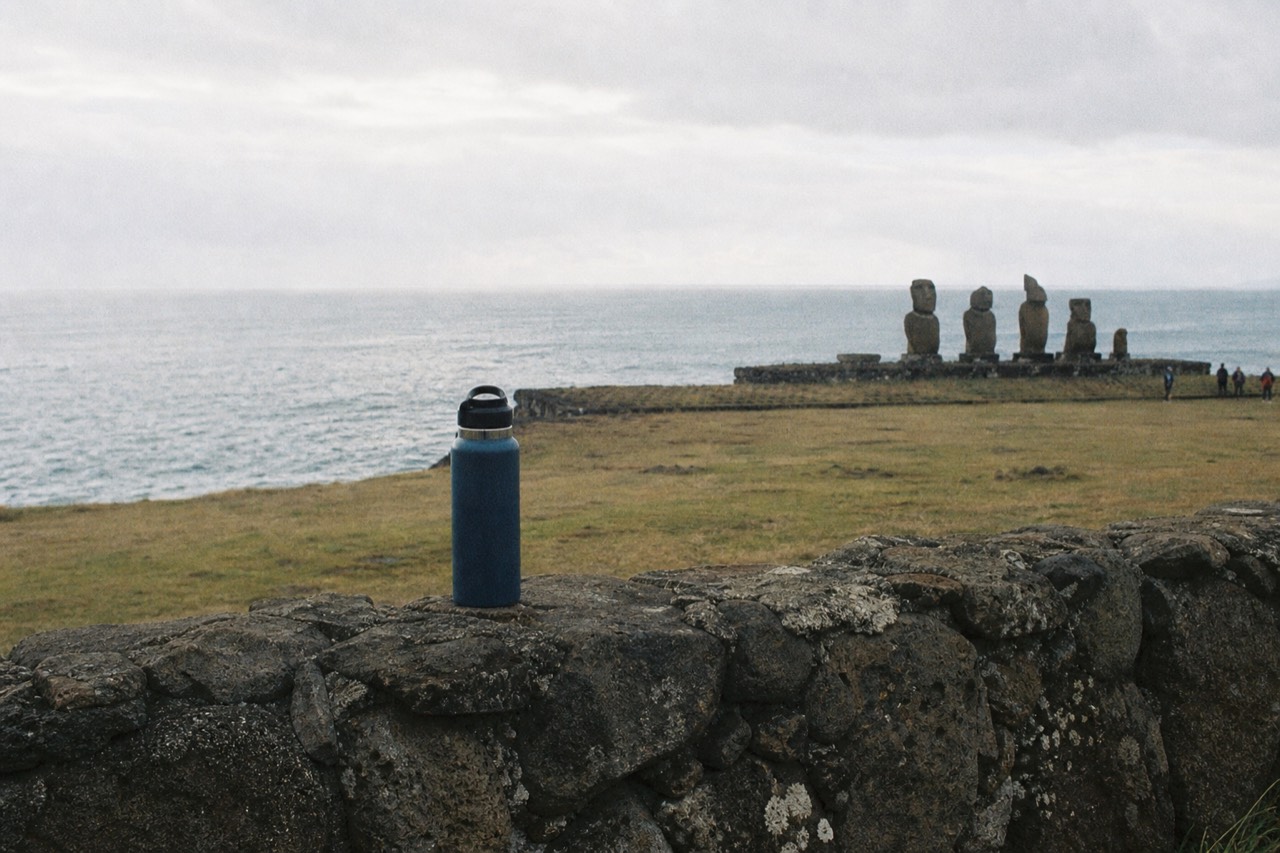
Rapa Nui has no river. Rain soaks through porous volcanic rock into underground reservoirs, and that is where the town's water comes from. Ask three current island sources whether you should drink it and you will get two answers and a shrug.
That disagreement is not a research failure, it is the actual state of the information, and it explains why almost every visitor ends up doing the same pragmatic thing.
Can you drink the tap water in Hanga Roa?
Sources split. An island information service states the tap is drinkable, purified from volcanic reservoirs and tested daily by the hospital. A 2026 island travel guide states the opposite, advising hygiene use only with bottled water or authorised dispensers for drinking. No unanimous local or hotel consensus exists in current reporting.
| The claim | What it rests on | What it means for your trip |
|---|---|---|
| The tap is safe to drink | Island information service citing volcanic reservoirs and daily testing by the Hanga Roa hospital | Brushing teeth, ice in town and cooking are not the question anyone is really asking |
| The tap is not recommended for drinking | A 2026 island travel guide advising hygiene use only, bottled or authorised dispensers otherwise | Enough doubt that most visitors buy or filter |
| No unanimous consensus among current guides | Multiple 2025 and 2026 sources contradicting each other | Ask your lodging on arrival; they will tell you what they themselves drink |
Read the two positions carefully and they are less opposed than they look. Neither describes contamination. One says the supply is treated and monitored, the other says it is not recommended for drinking, which in island guidance often reflects taste, mineral content and the absence of a settled local answer rather than a health finding.
The practical resolution is the boring one. For a trip of three to five days, the cost of defaulting to bottled or filtered water is trivial against the cost of losing a day of a very expensive trip. Use the tap for teeth and showers, drink something you chose deliberately, and stop thinking about it.
Why does the answer matter more here than elsewhere?
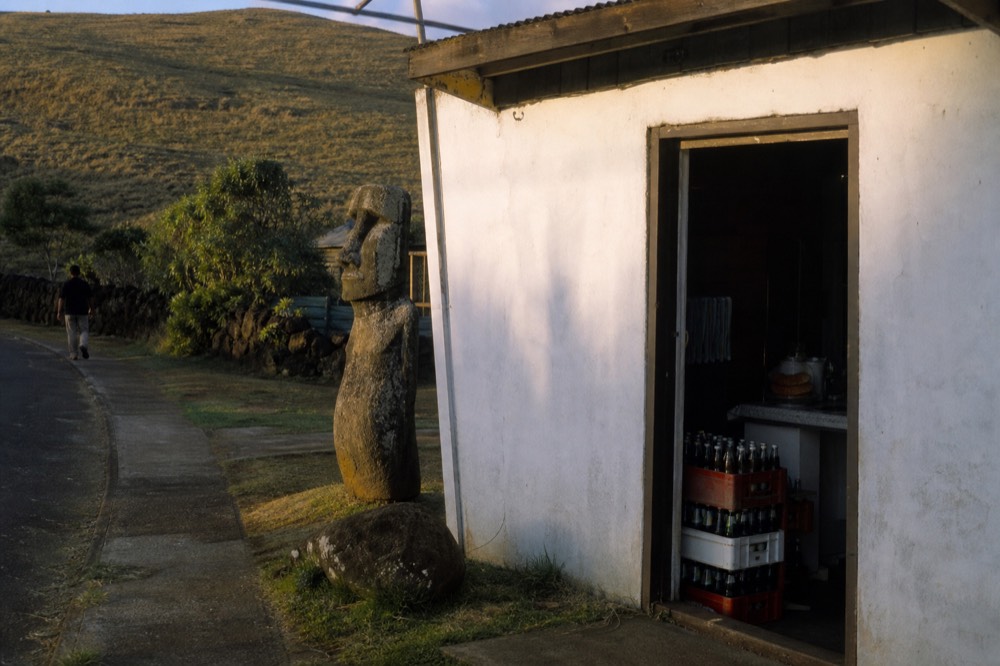
Because there is no shade to hide in. Rapa Nui lost its original palm cover long before European contact, and the palms at Anakena were planted in 1960. Every park site is open ground under a constant trade wind that dries sweat before you feel it, which is the fastest way to be dehydrated without noticing.
The temperature numbers understate the exposure. The island averages around 20 to 21°C across the year, with February highs near 27 to 28°C, which sounds gentle written down. Standing on the quarry slope at Rano Raraku at midday in that wind, on a treeless island in the middle of the Pacific, is a different physical experience from 27°C anywhere with trees.
Full-day circuits compound it. The flagship south-coast run is eight to nine hours across Vaihu, Akahanga, Rano Raraku, Tongariki, Te Pito Kura and Anakena, and almost all of that time is spent outdoors on open ground. Two litres that would last you a European city day will not last that one.
Where can you actually get water on a tour day?
Fill up before the van leaves your hotel, because the ticketed archaeological sites are not places with shops. Anakena is the exception: it is the one stop current guides describe as having restaurants, vendors, food trucks and picnic areas, and it is usually the last stop of the day rather than the first.
| Point in a full-day circuit | Somewhere to buy a drink? | What to know |
|---|---|---|
| Hotel pickup, Hanga Roa | Yes | The last easy refill; fill everything before you leave town |
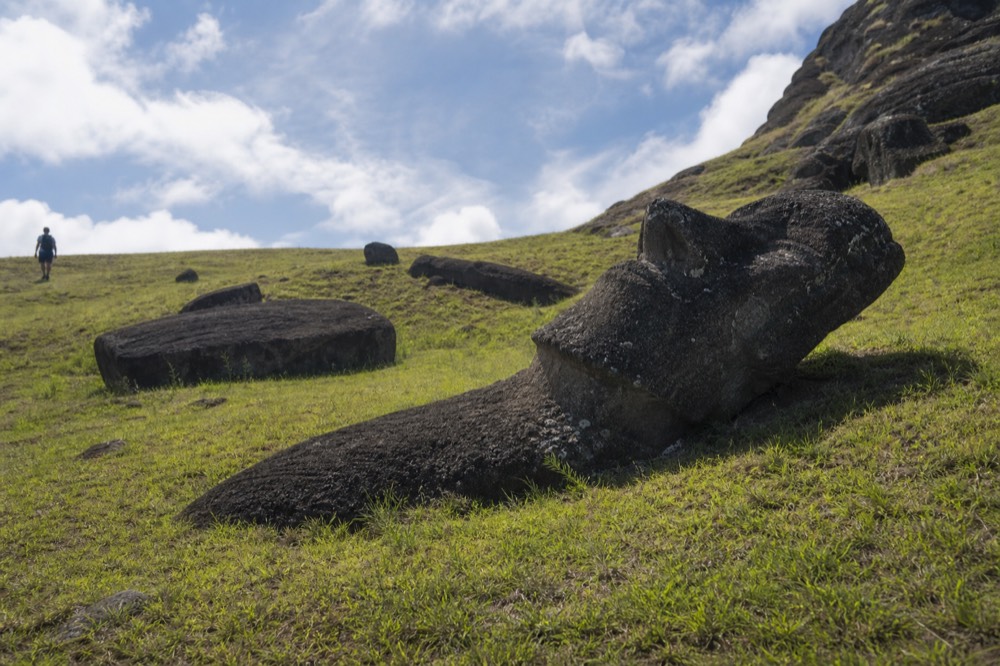
| Vaihu and Akahanga | No | Open coastal ahu where the moai still lie as they fell |
| Rano Raraku quarry | No | The longest walking stop of the day, and single-entry per park ticket |
| Ahu Tongariki | No | Fully exposed platform, no cover of any kind |
| Te Pito Kura | No | Short exposed stop |
| Anakena Beach | Yes | Restaurants, vendors and food trucks; carry pesos, since Anakena is noted as cash only |
That last row is the one that catches people out, and it has nothing to do with water quality. Anakena vendors are widely reported as cash only, so a traveler who spent the day assuming a card would work arrives thirsty at the one stop that could have sold them a drink. The currency and cash guide covers what to carry and where the two island ATMs are.
Sunrise trips flip the problem. A pre-dawn departure for Tongariki, where the site opens at 6:00 and the sun comes up between roughly 6:30 in summer and 7:30 in winter, means leaving before any shop in town is open. Whatever you are drinking that morning has to be bought the night before.
What does water cost on an island where everything flies in?
More than the mainland, like everything else here. Nothing is manufactured on Rapa Nui in any quantity, and the island is served by a single airline on one route from Santiago. That import cost sits on every plate and every bottle: a mid-range dinner runs $20 to $40 a head, well above mainland Chile.
The cheapest fix is also the greenest one. A refillable bottle plus whatever filtration you already trust turns the whole question into a non-issue for the length of a normal visit, and it removes the daily transaction entirely. Guides on this route describe authorised dispensers as the alternative to buying bottles, and hotels and guesthouses will point you at whichever option they use themselves.
There is a conservation angle that locals notice. This is a small island with limited waste handling, inside a national park inscribed on the UNESCO World Heritage list, where community-run conservation crews have been treating fire-damaged moai since 2025. A week of single-use bottles per visitor adds up in a place with nowhere to put them. Nobody will lecture you about it. It is still true.
What should you actually pack for a day in the park?
Water first and more of it than the thermometer suggests. Sun cover that survives wind. Repellent, since dengue transmission was confirmed on the island in March 2026. Cash for Anakena. And shoes for uneven volcanic ground rather than for a beach.
Build the day around the one refill point. Most circuits end at Anakena, which means the water you carry has to cover the south coast, the quarry and Tongariki before you reach anywhere selling anything. Guides usually carry a reserve, and the better small-group operators say so in their listings, but that is a courtesy rather than a plan.
The park rules do the rest of the work for you. Fires, camping, pets and alcohol are prohibited across the national park, every site visit needs a Ma'u Henua-accredited guide, and Rano Raraku and Orongo are single-entry per ticket. Turning up under-watered to the one visit you get at the quarry is a genuine waste of a $100 park ticket, and the park ticket guide explains why that rule exists.
For most visitors the sensible move is booking a circuit that starts with hotel pickup, so the last thing you do before leaving is fill up in your own room. Compare the actual route, duration and drink inclusions for your chosen day; a smaller group alone does not establish longer stops. The safety rundown covers the rest of the exposure question, and the day-tour lineup shows which formats include pickup.
Match The Day To Your Plans And Compare Costs
Editorial starting point. Confirm your party's age, access needs and departure details on the listing.
Private History Of The Moai: A private moai-history route through the quarry and coastal platforms; a water bottle is listed. Booking details: Confirm park admission, meal arrangements, party eligibility and access needs before booking. 7 hours
Moai And Mystery Full Day: Local guide and transport linking Vaihu, Akahanga, the quarry, Tongariki and Anakena. Booking details: National park ticket is extra. Confirm access needs and child eligibility with the operator. 7 hours
Compare Your Actual Quotes
Use totals for the same party and the same itinerary in one currency. Include guide, transport, admission and meals where relevant. These are your quotes, not live prices.
Match the same experience, dates and party. Compare guide and vehicle time, admission, meals and cancellation terms. A price difference alone does not establish equivalent value.