Easter Island itinerary: 3, 4 and 5-day plans that actually fit
Three days on Rapa Nui sounds like three days of sightseeing, and it is not: the arrival and departure flights take two half days off the top, which leaves exactly one full circuit.
 By Pedro Pakarati, Rapa Nui tour guide and archaeological specialist
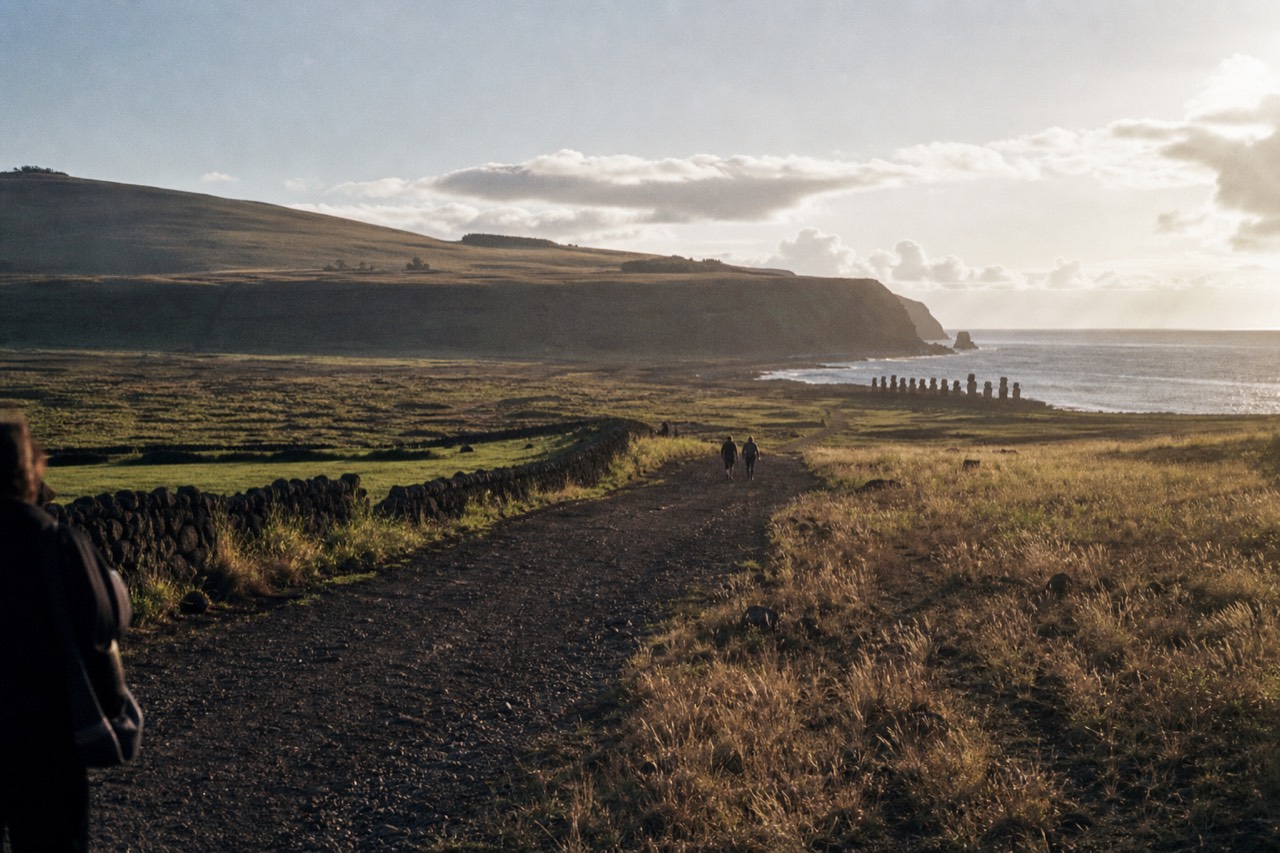
Short answer
Four days is the honest minimum. A three-day trip usually means two nights and one full guided day, enough for the south and east circuit only. Four days covers both circuits, the arrangement most visitors need. Five days adds the Tongariki dawn run, an evening astronomy session and a free day at Anakena or in town.
The flight from Santiago takes about five and a half hours over open ocean, and LATAM is the only airline that makes it. That single fact does more to shape an itinerary here than any list of sites, because it means your trip length is not something you choose freely. It is set by which days the aircraft operates and how the arrival and departure carve up your first and last mornings.
Work backwards from that and the planning gets simple. There are two guided circuits on this island, a southern and eastern loop and an Orongo and Rano Kau loop. Everything else, the beach, the dawn run, the astronomy session, the free afternoon in Hanga Roa, fits around them. A useful itinerary is really just a decision about how many of those circuits you can fit and what you do with the gaps.
How many days do you need on Easter Island?
Four full-ish days is the honest minimum for both circuits. Three days typically buys two nights and one guided circuit. Four days covers south and east on one day, Orongo and Rano Kau on the other. Five days adds the Tongariki dawn outing, a night astronomy session and unstructured time at Anakena or in town.
| Trip length | Nights | Full guided days available | What you actually see | What you miss |
|---|---|---|---|---|
| 3 days | 2 | 1 | South and east circuit: Vaihu, Akahanga, Rano Raraku, Tongariki, Te Pito Kura, Anakena | Orongo, Rano Kau, Puna Pau, Ahu Akivi, the caves, sunrise |
| 4 days | 3 | 2 | Both circuits, the full standard set of sites | The dawn run, the night sky, a real beach afternoon |
| 5 days | 4 | 2 to 3 | Both circuits plus a dedicated Tongariki sunrise and an astronomy evening | Very little; this is the complete version |
| 6 to 7 days | 5 to 6 | 2 to 4 | Everything above with genuine slack for weather, diving or a repeat sunrise | Nothing, but the marginal day adds least |
| 1 day (a stopover) | 0 | 0 | Not possible; there is no day-trip option to this island | Everything |
The last row is not a joke. There is no way to visit Rapa Nui as a day trip from anywhere, and the entry system will not let you try: the mandatory FUI form requires a non-transferable return ticket and a Sernatur-registered accommodation booking before you fly, with a maximum tourist stay of thirty days. That paperwork alone rules out the itinerary most first-time planners imagine.
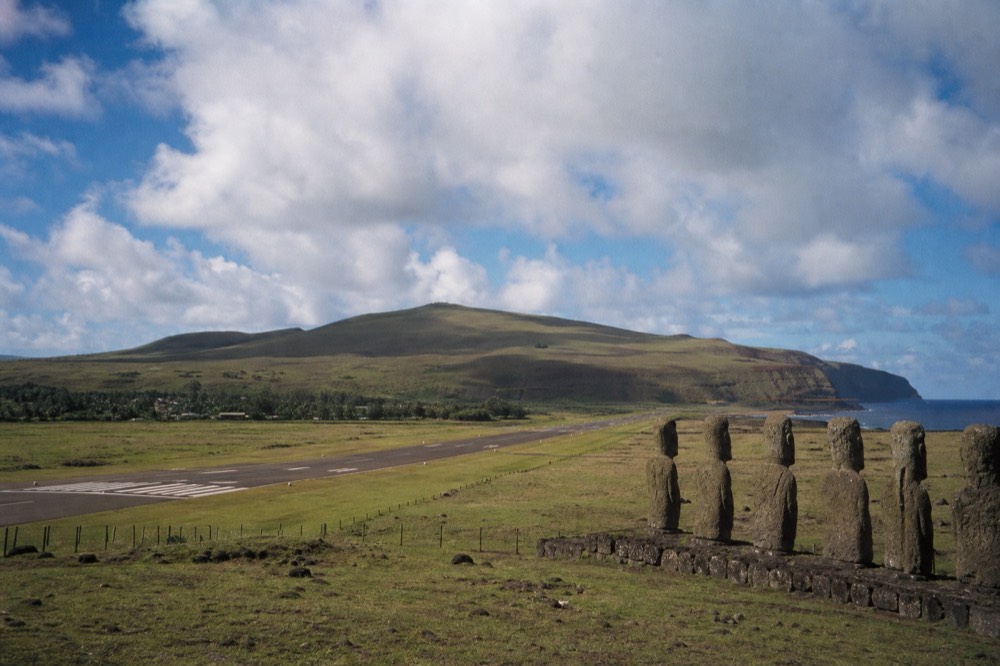
The four-day recommendation is not padding. The two circuits do not overlap: one runs the south coast to the quarry, the great ahu at Tongariki, Te Pito Kura and Anakena; the other climbs to the crater rim at Rano Kau for the ceremonial village at Orongo, then takes in Vinapu, the topknot quarry at Puna Pau, the Ana Te Pahu caves and the seven inland-facing moai at Ahu Akivi. Skip either one and you have seen half the island, not most of it.
Where five days earns its keep is not extra sites, it is repetition and weather insurance. Standing at Tongariki at dawn is a different experience from standing there at eleven in the morning, and an astronomy session is weather-dependent by nature, so having a spare night matters. Anyone deciding between four and five should ask whether they want to see more places or see the best places twice. Most people who have been will say the second.
How much of your trip do the flights actually take?
More than a full day in practice. LATAM is the only carrier to Mataveri, flying from Santiago in about five and a half hours, typically five or more services a week on Boeing 787s. That schedule sets your trip length in fixed increments, and the arrival and departure days each function as a half day at best.
Everything about the schedule points the same way. LATAM is the sole operator into Mataveri, flying from Santiago in about five and a half hours nonstop on Boeing 787s, typically five or more services a week with one to two departures on some days and higher frequency in peak periods. There is no alternative route and no competing carrier, so the days on which you can arrive and leave are simply given to you. The airline's route page is where that grid starts.
Because frequency is limited, a lot of trips end up longer or shorter than intended simply because the outbound and inbound days that work are three or four apart. That is not a problem to solve, it is a constraint to plan around, and the sensible response is to check the flight days first and then choose which itinerary below fits the gap. Add the paperwork to that: the FUI entry form has to be completed online before you fly, backed by a non-transferable return ticket and a Sernatur-registered accommodation booking, with a maximum tourist stay of thirty days.
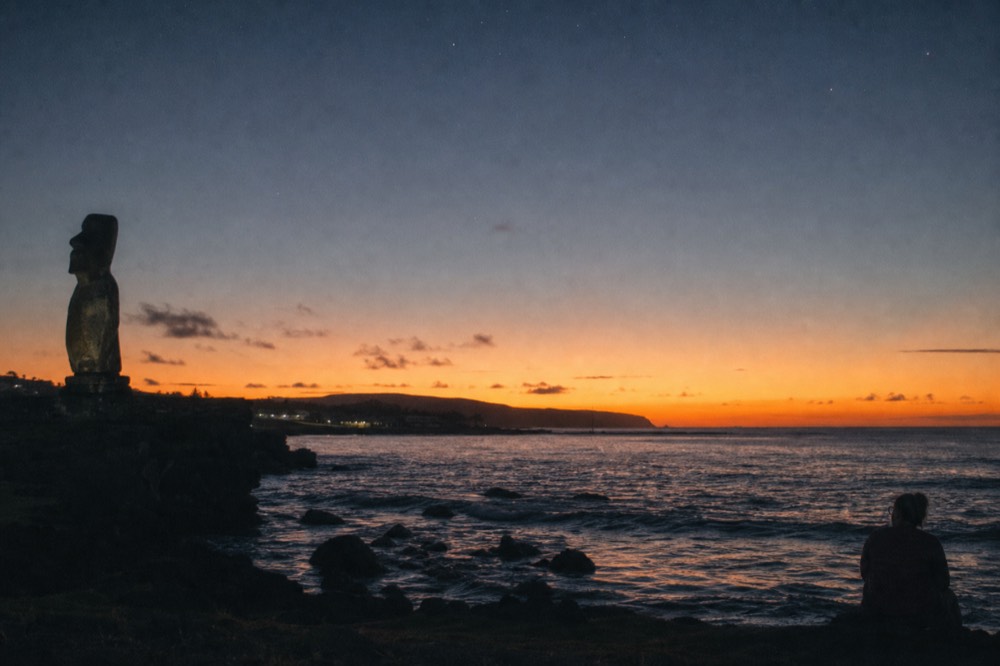
Arrival afternoons have an obvious best use and most visitors find it by accident: walk out to Tahai for sunset. The Tahai area, along with Anakena beach itself and Hanga Roa town, is one of the practical exceptions to the guide requirement, so it costs nothing extra and needs no booking. It also puts moai in front of you within hours of landing, which takes the pressure off the rest of the plan.
Departure days are the ones that get wasted. A morning flight leaves nothing; an afternoon flight leaves time for the harbour, a last walk to Tahai, a swim at Anakena if you have transport, or breakfast somewhere with a view. What it does not leave is room for a guided circuit, and booking one for a departure day is the single most common way people lose money on this island. How the single route works in detail covers the connection logic and the booking window that saves roughly 27 percent on the fare.
What does a three-day plan look like?
Two nights, one full guided day. Land, walk Hanga Roa and see sunset at Tahai. Give the whole of day two to the south and east circuit, which is where the quarry, Tongariki and Anakena all sit. Fly out on day three with, at best, a free morning in town. Orongo and Rano Kau will not fit.
| Day | Morning | Afternoon | Evening |
|---|---|---|---|
| Day 1, arrival | Flight from Santiago, check in, collect or confirm park ticket | Hanga Roa on foot: harbour, shops, the town itself | Walk to Tahai for sunset, no guide needed |
| Day 2, the circuit | Full-day guided circuit begins with hotel pickup: Vaihu, Akahanga, then Rano Raraku quarry | Ahu Tongariki, Te Pito Kura, swim at Anakena | Dinner in town, early night if flying out |
| Day 3, departure | Free morning in town, harbour, last purchases | Flight out |
Three days is a compromise itinerary, and anyone planning one should know exactly what they are giving up. Rano Kau's crater and the stone village at Orongo are the second half of the island's story, the part about the birdman cult rather than the moai, and they sit on the other circuit entirely. So do the topknot quarry at Puna Pau, the lava caves at Ana Te Pahu, and the seven moai at Ahu Akivi that face out to sea instead of inland like every other ahu.
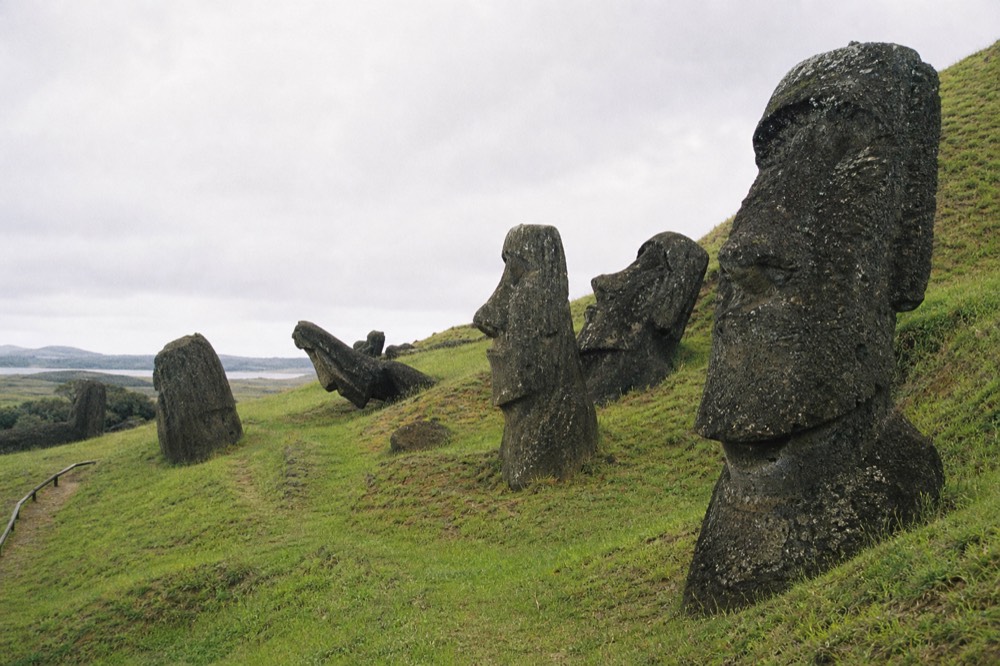
If three days is genuinely fixed, spend the money on the quality of that one day rather than trying to cram a second. A private full-day circuit lets you set the pace, linger at the quarry and skip what does not interest you, and on a single-day trip that flexibility is worth more than it would be on a longer stay.
There is one variation on the three-day plan that works better than the standard version: use day three's morning for the crater rather than the town. Rano Kau and Orongo can be covered as a half-day guided outing rather than a full circuit, which turns a wasted departure morning into the second half of the island. It only works with an afternoon or evening flight, so check the schedule before counting on it.
What does a four-day plan look like?
Three nights and two full guided days, one circuit each. Day two runs south and east to the quarry, Tongariki and Anakena. Day three climbs to Orongo on the Rano Kau rim and takes in Vinapu, Puna Pau, the Ana Te Pahu caves and Ahu Akivi. Day four leaves a free morning before the flight.
| Day | Morning | Afternoon | Evening |
|---|---|---|---|
| Day 1, arrival | Flight in, check in, settle | Hanga Roa: harbour, shops, orientation walk | Sunset at Tahai |
| Day 2, southern and eastern circuit | Pickup from your lodging, Vaihu and Akahanga, then Rano Raraku | Ahu Tongariki, Te Pito Kura, Anakena and Ahu Nau Nau, swim | Dinner in town |
| Day 3, Orongo and Rano Kau circuit | Climb to the crater rim, ceremonial village at Orongo | Vinapu, Puna Pau topknot quarry, Ana Te Pahu caves, Ahu Akivi | Astronomy session if a clear night is scheduled |
| Day 4, departure | Free morning, town or a last look at Tahai | Flight out |
The Hotumatur two-day highlights package covers the southern and eastern sites on one day and Orongo, Puna Pau, Ana Te Pahu and Ahu Akivi on the other, with accommodation pickup. Compare its current total for your dates with separate guided days, including admission and meals in both budgets.
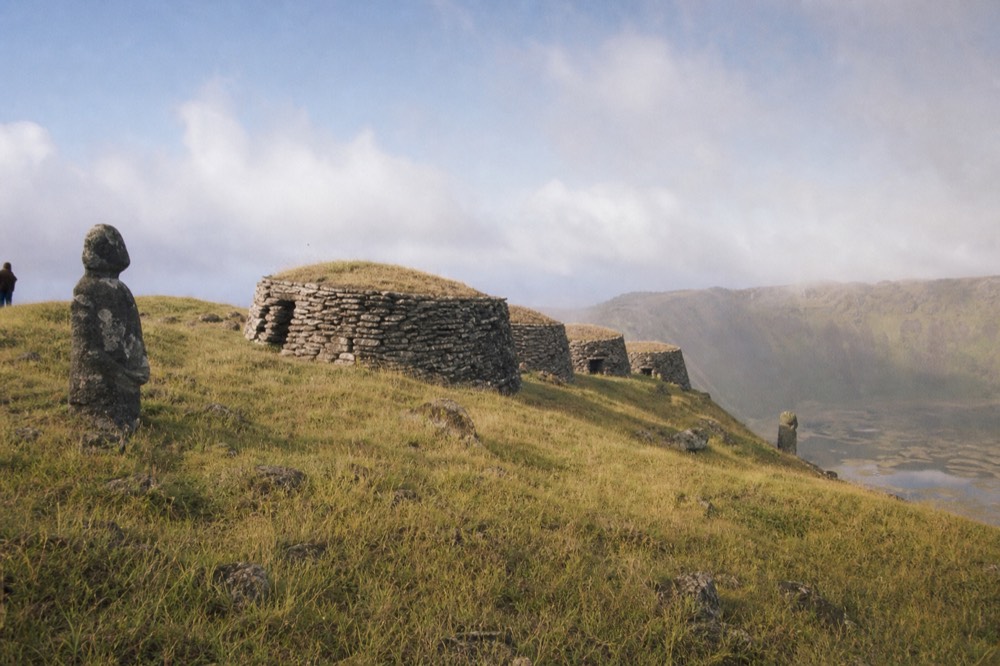
Sequence matters more than most people expect. Running the southern and eastern circuit first is the better order because it front-loads the sites everybody flies here for, which protects you if weather ruins a later day. It also means the quarry visit, your one permitted entry to Rano Raraku, happens while you still have days in hand should anything go wrong with transport.
The gap in the four-day plan is the dawn. Nothing in this itinerary puts you at Tongariki before sunrise, and the standard circuit day arrives there mid-morning when the light is flat and the vans have gathered. Anyone unwilling to give that up either stretches to five days or books the dawn outing as an add-on, which in practice means finding a product that includes it rather than arranging a 5:00 am guide for one stop.
Evenings are the underused part of a four-day trip. The astronomy session runs three and a half hours, meets at the Katipare library in Hanga Roa and includes a hotel drop-off, so it slots into a circuit day without touching the daylight schedule. It is weather-dependent and runs around the moon calendar, which is the argument for pencilling it in early rather than leaving it to the last night.
What does a five-day plan look like?
Four nights, two circuits, one dawn and one night sky. Days two and three run the two circuits as in the four-day plan. Day four starts before 6:00 am at Tongariki for sunrise, leaves the afternoon free for Anakena or the town, and keeps the evening for stars. Day five is the departure morning.
| Day | Morning | Afternoon | Evening |
|---|---|---|---|
| Day 1, arrival | Flight in, check in | Hanga Roa orientation walk, harbour, shops | Sunset at Tahai |
| Day 2, southern and eastern circuit | Vaihu, Akahanga, Rano Raraku quarry | Tongariki, Te Pito Kura, Anakena | Dinner in town |
| Day 3, Orongo and Rano Kau circuit | Rano Kau rim, Orongo village | Vinapu, Puna Pau, Ana Te Pahu, Ahu Akivi | Rest, or an early night before dawn |
| Day 4, dawn and free time | Leave around 5:30 for the 6:00 am opening at Tongariki, sunrise around 6:30 in summer | Free: Anakena swim, Hanga Roa, or diving | Astronomy session, 3.5 hours with drop-off |
| Day 5, departure | Slow morning, last walk to Tahai | Flight out |
Five days is where the itinerary stops being a checklist and starts being a stay. The difference shows up on day four, which contains no obligation at all beyond the dawn: no van at 9:00 am, no guide waiting, nothing to be late for. That day is what most returning visitors describe as the one they remember, and it only exists if the trip is long enough to afford it.
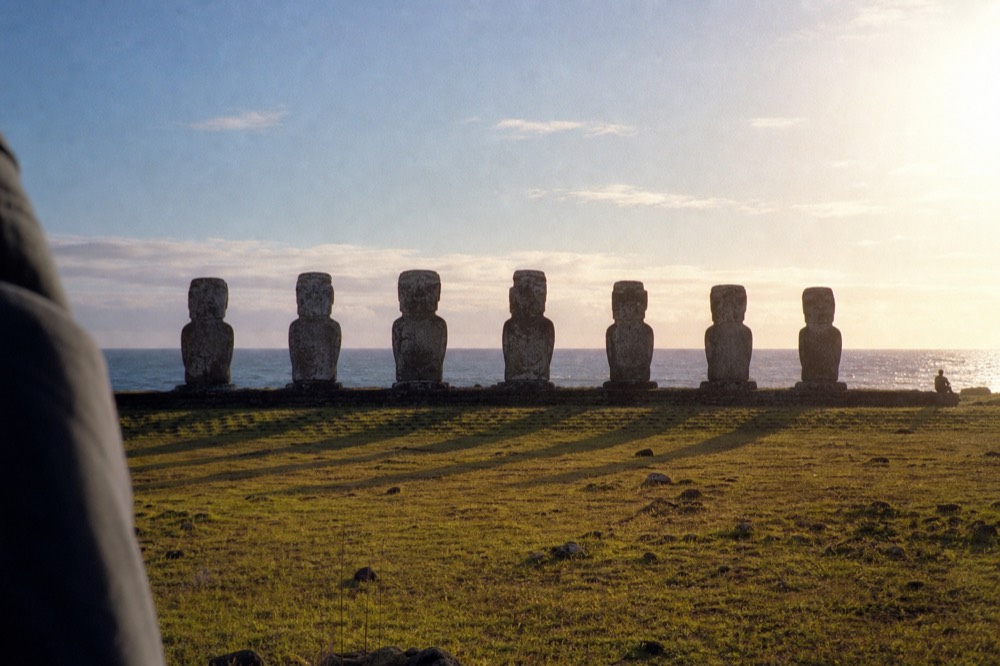
The dawn logistics are worth stating precisely. The site opens at 6:00 am for dawn visitors and sunrise falls around 6:30 between December and February, drifting to around 7:30 between June and August. Park hours generally run 6:00 am to 7:00 pm. Tongariki is not one of the single-entry sites, so a dawn visit on day four does not use up anything you spent on day two, and you can stand in front of the same fifteen figures twice in one trip.
The DREAM package combines two full circuit days with a separate Tongariki sunrise outing. Its current second circuit includes Orongo, Akivi, Vinapu, Puna Pau, Huri a Urenga, Tahai and Rano Kau; Ana Te Pahu is listed on the separate Hotumatur two-day route, so choose that option if the cave is essential. Confirm the operating-day sequence against your stay. Compare current quotes with the same party, itinerary and inclusions.
Diving fits here too, on the free afternoon rather than as a separate day. Sea temperatures run from about 20.5°C in late August to 25 to 27°C in early March, and there is an underwater replica moai offshore, sunk for a Hollywood film in 1994, that has become a dive site in its own right. Conditions depend on daily swell rather than the month, so treat it as an option to confirm on the ground. The other free-afternoon standout is a horseback ride to the summit of Terevaka, the island's highest point, which is the one place the whole triangle and the surrounding ocean are visible at once; it is a separate booking from the guided circuits.
How do you sequence the single-entry sites?
Two sites on the island allow only one visit per park ticket: Rano Raraku and Orongo. Everything else can be revisited while the ticket stays valid for ten consecutive days. Because the two single-entry sites sit on different circuits, a two-circuit itinerary uses both allowances exactly once, which is the neatest possible fit.
| Site | Entry rule | Which circuit it sits on | Sequencing consequence |
|---|---|---|---|
| Rano Raraku, the quarry | Single entry per ticket | Southern and eastern circuit | One visit only; no returning for better light |
| Orongo, Rano Kau rim | Single entry per ticket | Orongo and Rano Kau circuit | One visit only; pick the clearer day if you can |
| Ahu Tongariki | Standard entry | Southern and eastern circuit | Can be seen mid-morning and again at dawn |
| Anakena and Ahu Nau Nau | Standard entry | Southern and eastern circuit | Revisit freely on a free afternoon |
| Ahu Akivi, Puna Pau, Vinapu, Ana Te Pahu | Standard entry | Orongo and Rano Kau circuit | Revisit if you have transport and a guide |
| Tahai | Practical exception, walkable from town | Neither | Free evenings, as many as you like |
| Every park site | Accredited Ma'u Henua guide required | Both | No independent site visits inside the park |
The trap this creates is specific and expensive. A visitor who joins a full-day circuit on day two, uses their single Rano Raraku entry, then books a second full-day circuit later in the week with a different operator will find that the second day's quarry stop is not available to them. The ticket, not the tour, controls that. Two different products covering the same circuit do not give you two quarry visits.
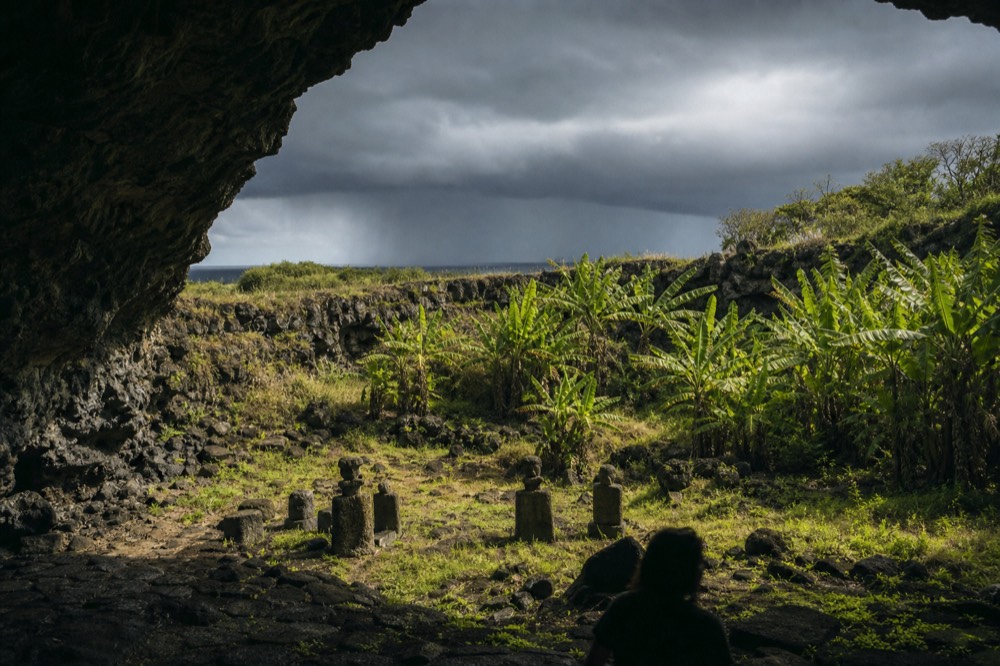
The ticket itself is $100 for a foreign adult and $40 for a foreign child, up from $80 on 1 October 2025 following the Ma'u Henua community's announcement of 19 May 2025, and Chilean adults pay 40,000 CLP. It runs ten consecutive days from the date of issue, which comfortably covers any itinerary on this page, and it can be bought in advance through the official park ticket site or on arrival. The standalone tours compared here exclude it; some lodging packages include admission. The full ticket rules go through the child rates and the buying process.
The guide requirement is the other half of the sequencing problem. Entry to park sites needs an accredited Ma'u Henua guide, so a "free day" cannot include a self-driven visit to the quarry or Orongo, however tempting a rented Jimny makes it look. What a free day can include is Anakena, Hanga Roa, the harbour, Tahai, and the water. Plan the gaps around those, not around the park.
Which tours cover which days?
One guided day covers one circuit. The two-day highlights package covers both and is the natural fit for a four-day trip. The three-day package covers both plus a dedicated Tongariki dawn and suits a five-day trip. Single full-day products fill a three-day trip or replace a circuit day with a private or small-group version.
| Trip length | Guided days you need | Product format | Illustrative price | Historical rating (not live) | Notes |
|---|---|---|---|---|---|
| 3 days | 1 | Full-day circuit, Rapa Nui Dream | $120 | 4.7 (105) | 8 to 9 hours, hotel pickup, south and east |
| 3 days, budget | 1 | Full-day Moai and Mystery, Hotumatur | $100 | 4.4 (24) | Quarry and coastal circuit; compare current quotes |
| 3 days, private | 1 | Private full-day moai monuments, Green Island | $230 | 4.9 (28) | Private vehicle and guide, your pace |
| 4 days | 2 | Easter Island Highlights 2-day, Hotumatur | $170 | 4.4 (266) | Both circuits with accommodation pickup |
| 4 days, unhurried | 2 | Boutique small-group full day, plus one more circuit day | $200 | 4.9 (33) | Confirm vehicle and group arrangements |
| 5 days | 2 plus a dawn | 3-day package with Tongariki sunrise, Rapa Nui Dream | $250 | 4.7 (154) | Two circuits plus a dedicated dawn outing |
| 5 days, archaeology focus | 2 to 3 | Private 7-hour archaeological day, Kava Kava | $294 | 5.0 (20) | Akahanga, quarry, Tongariki, Te Pito Kura, Anakena |
| Any length, evenings | 0 | Rapa Nui Stargazing, Green Island | $140 | 4.5 (64) | 3.5 hours, meets in Hanga Roa, drop-off included |
Treat these figures as illustrative planning examples, not current quotes. Compare packages and separate days for the same dates, party and inclusions. A private format changes the guide and vehicle arrangement; it does not grant extra access to protected sites.
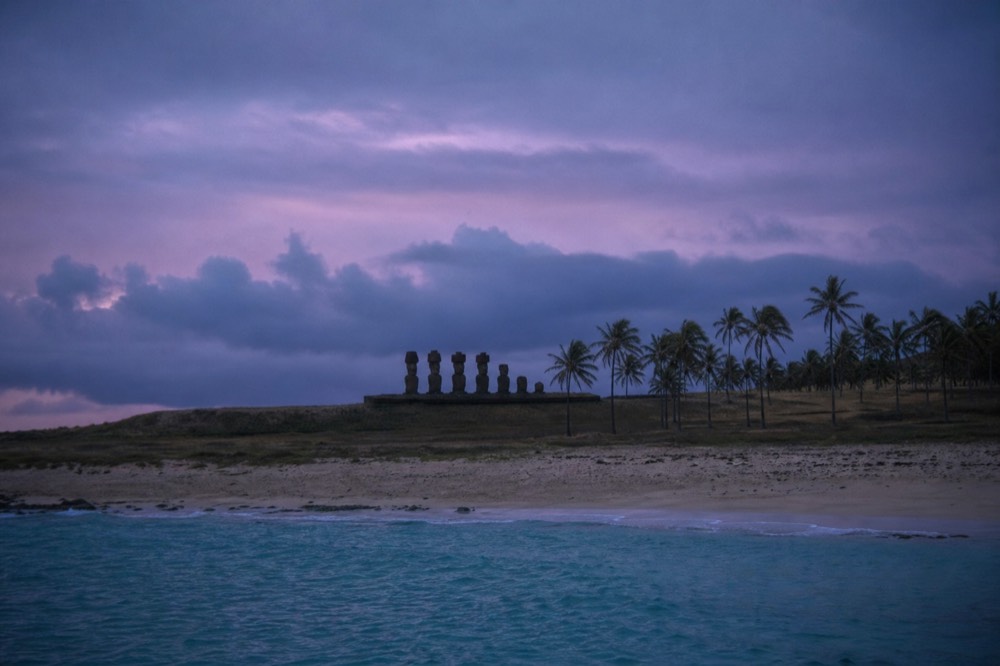
For an itinerary that has a specific gap rather than a specific budget, it is usually easier to work from the full lineup than from a recommendation. All the current Easter Island tours sit in one place with their days, durations and starting prices, and the multi-day packages and single full days are separated so the two-circuit question resolves quickly. Anyone whose trip is short enough that one day has to carry everything should look at what a private day changes.
One planning note on availability rather than price. The island runs on a finite number of vehicles and accredited guides, and austral summer between December and March books out first. In practice that means the guided days should be fixed before the accommodation and often before the flights, which inverts the usual order of trip planning. During the Tapati fortnight, 30 January to 12 February 2027, it applies twice over.
What does each itinerary actually cost, day by day?
A four-day trip with two guided days runs from roughly $760 per person at the floor of every published band to roughly $1,890 at the ceiling. Published 2026 four-day budgets land at $1,200 to $1,600 for budget travel and $1,800 to $3,200 mid-range, because real trips never sit at the bottom of every band at once.
| Stage | What you add | Low end | High end | Running low | Running high |
|---|---|---|---|---|---|
| Before you fly | Round-trip Santiago to Mataveri | $342 | $504 | $342 | $504 |
| Before you fly | Park ticket, foreign adult | $100 | $100 | $442 | $604 |
| Day 1, arrival | One night plus dinner | $43 | $240 | $485 | $844 |
| Day 2, first circuit | Guided day, night, dinner | $128 | $470 | $613 | $1,314 |
| Day 3, second circuit | Guided day, night, dinner | $128 | $534 | $741 | $1,848 |
| Day 4, departure | Last meal before the flight | $20 | $40 | $761 | $1,888 |
The low column uses the documented floor of every published band: $342 round trip, a $23 hostel dorm bed, a $20 meal, and the $170 two-day package split across two days. The high column uses the documented ceiling: a $504 fare, a $200 hotel night, a $40 dinner, and two private guided days at $230 and $294. Camping brings the bed line lower still at roughly $16 to $20 a night, and a scooter at $35 to $50 a day or a compact 4WD at $60 to $115 changes the free-day arithmetic.
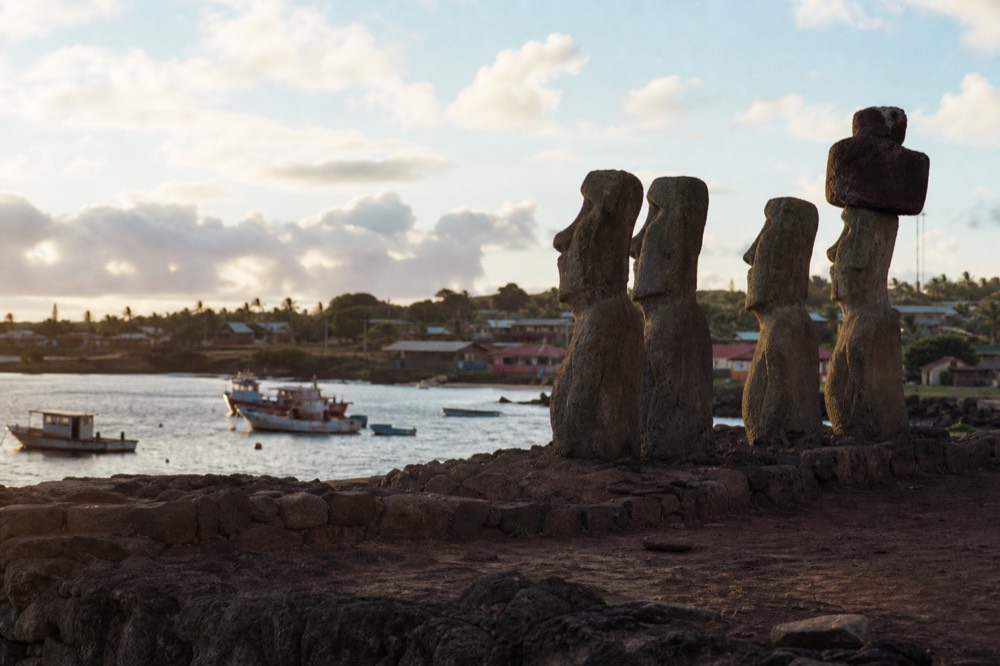
The gap between that floor and the published budget bands is the useful part. Reported 2026 figures put a four-day trip at $1,200 to $1,600 for budget travel, $1,800 to $3,200 mid-range and $3,500 upward for comfort, with daily on-island spending running from about $43 to $212 per person before flights. Nobody hits the floor of every line simultaneously, and the lines that quietly move a real budget are meals, transport on free days and the difference between a dorm and a room. The full budget math breaks that down properly.
Two costs surprise people and both are structural rather than avoidable. The standalone tours compared here exclude park admission; some lodging packages include it. Check your chosen booking before adding the ticket to your budget. And meals run high because almost everything is imported: a mid-range dinner sits at $20 to $40 per person, noticeably above mainland Chile. Neither figure is negotiable, so build both into the plan rather than discovering them on day one.
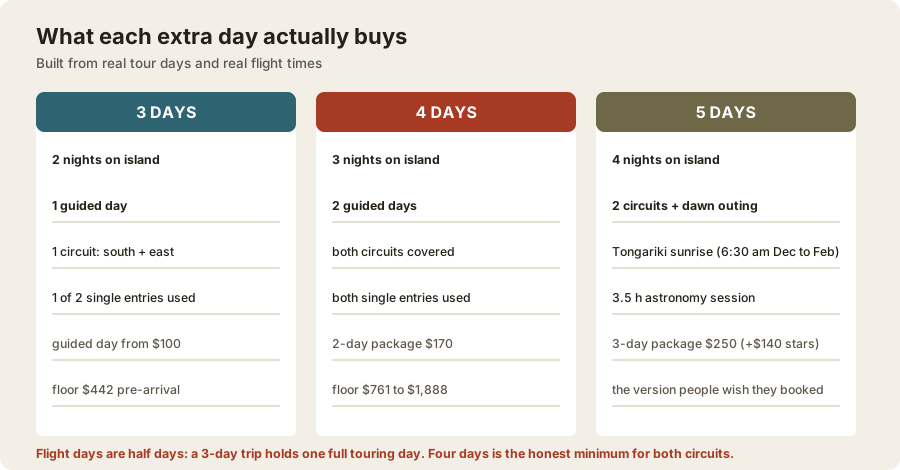
Whichever length you land on, the order of booking stays the same: flight days first because the schedule is thin, guided circuit days second because vehicles and guides are the scarce resource, a registered bed in Hanga Roa third because the FUI form needs it, and the park ticket any time before you walk into the park. If the dates are still open, the seasonal read covers which months make the dawn and the night sky worth building around, and the wider list of things to do fills the free afternoons that a four or five-day plan creates.
Common questions
Is three days enough for Easter Island?
It is enough for one circuit, not for the island. A three-day trip usually means two nights, with the arrival and departure days functioning as half days, which leaves a single full guided day. That day covers the south and east: Vaihu, Akahanga, the Rano Raraku quarry, Tongariki, Te Pito Kura and Anakena. Orongo, Rano Kau, Puna Pau, the caves and Ahu Akivi all sit on the other circuit and will not fit.
Can you visit Easter Island as a day trip from Santiago?
No. The flight is about five and a half hours each way, LATAM is the only operator, and the entry system requires a FUI form with a non-transferable return ticket and a Sernatur-registered accommodation booking before you board. There is no same-day return product and no cruise-style stopover that works. The shortest realistic trip is two nights.
Do you need a car if you are booking guided days?
Not for the park, because entry to park sites requires an accredited Ma'u Henua guide regardless of how you got there. A rental only helps on free days, for Anakena, the coast road and getting around outside the park. Scooters run $35 to $50 a day and a compact 4WD $60 to $115, against taxis at roughly $20 to $30 each way to sites like Tongariki.
Which circuit should you do first?
The southern and eastern one. It contains the quarry, Tongariki and Anakena, the sites most people came for, so doing it first protects the trip against a later weather or transport problem. It also uses your single Rano Raraku entry early, while you still have days in hand if something goes wrong. The Orongo and Rano Kau day works well as the second circuit.
Can you see the Tongariki sunrise on a normal day tour?
Not usually. Standard full-day circuits reach Tongariki mid-morning. The dawn requires either a dedicated sunrise outing, which is normally sold as part of a multi-day package, or your own transport plus a guide willing to start before 6:00 am. Tongariki is not a single-entry site, so a dawn visit does not use up the stop you already made on a circuit day.
How far ahead should the guided days be booked?
Earlier than the beds, and often earlier than the flights. The island has a finite number of vehicles and accredited guides, and austral summer from December to March fills first. During Tapati, 30 January to 12 February 2027, everything tightens further. Outside those windows a few weeks is normally enough for the standard circuits, but the dawn and astronomy products run on fixed days and go sooner.
Match The Day To Your Plans And Compare Costs
Editorial starting point. Confirm your party's age, access needs and departure details on the listing.
Easter Island Highlights In Two Days: Quarry and coastal moai on one day; Orongo, Puna Pau, Ana Te Pahu and Akivi on the other. Booking details: Site admission and lunch are extra. Confirm terrain and vehicle suitability for your party. 2 days
Full-Day Rapa Nui Circuit: Vaihu, Akahanga, Rano Raraku, Tongariki and Anakena in one guided day. Booking details: Park ticket, food and drinks are extra. Moderate fitness required; review the operator’s health restrictions. 8–9 hours
Compare Your Actual Quotes
Use totals for the same party and the same itinerary in one currency. Include guide, transport, admission and meals where relevant. These are your quotes, not live prices.
Match the same experience, dates and party. Compare guide and vehicle time, admission, meals and cancellation terms. A price difference alone does not establish equivalent value.