Is Easter Island worth visiting? An honest yes, with conditions
What a Rapa Nui trip really costs, who comes home disappointed, who calls it the trip of their life, and the arithmetic that decides which one you are.
 By Pedro Pakarati, Rapa Nui tour guide and archaeological specialist
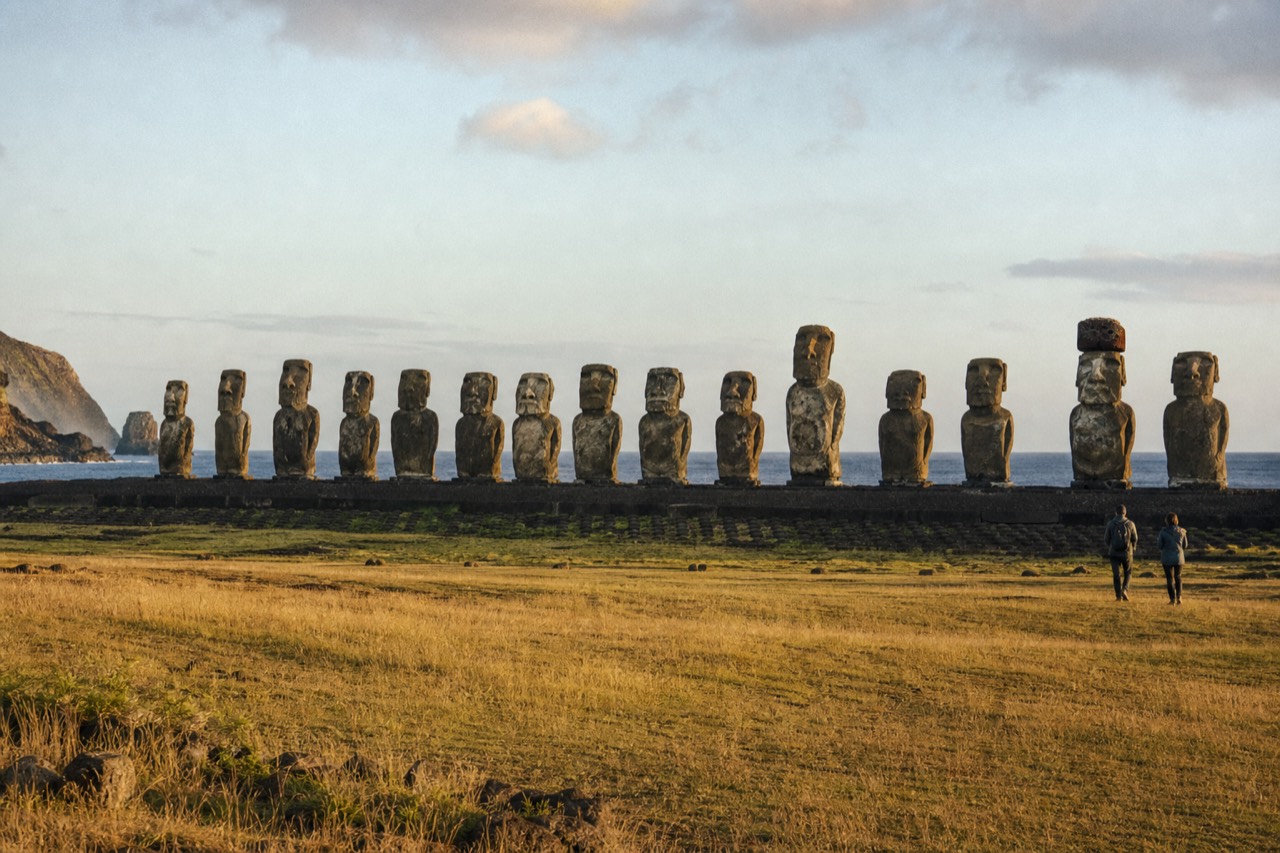
Fifteen moai stand in a row at Tongariki with their backs to two thousand miles of open Pacific. That distance is the entire argument, for the trip and against it. It is why the statues survived, why the flight costs what it costs, and why nobody arrives here by accident.
Most travelers asking whether Rapa Nui is worth it are really asking two separate questions at once. One is about money. The other is about expectations, and that is the one that actually decides how the trip lands.
What does a Rapa Nui trip actually cost?
A four-day trip from Santiago lands in three bands: roughly $1,200 to $1,600 per person frugally, $1,800 to $3,200 mid-range, and $3,500 or more with higher-end lodging and private guiding. Round-trip fares to the island typically run $342 to $504 in 2026, spiking past $650 in peak weeks.
| Trip style | 4 days from Santiago, per person | Round-trip airfare assumed | Where you sleep | How you get around |
|---|---|---|---|---|
| Frugal | $1,200 to $1,600 | $350 to $500 | Hostel dorm or campsite, $16 to $47 a night | Scooter, bike or shared transport |
| Mid-range | $1,800 to $3,200 | $500 to $800 | Mid hotel double, $45 to $200 and up | Rental car $60 to $115 a day, mix of guided days |
| Comfort | $3,500 and up | Peak or flexible fares | Higher-end lodging | Private vehicle and guide, more dining out |
Two numbers inside that table do most of the work. The airfare is the fixed cost, one route, one airline, and no way around it: LATAM is the only carrier flying the Santiago to Mataveri leg, about five and a half hours each way on a 787. Booking roughly ten weeks out has been running about 27 percent cheaper than last-minute in 2026.
The second number is the park ticket, and it catches people. Entry to Rapa Nui National Park costs $100 for a foreign adult and $40 for a child, up from $80 on 1 October 2025 after the Ma'u Henua community announced the adjustment in May of that year. It is valid ten consecutive days, it is bought on the official park site or on arrival, and many day tours exclude it. Budget it separately unless your selected package explicitly includes admission.
Who leaves Rapa Nui disappointed?
Three groups, reliably. Travelers who booked one rushed day and saw the island through a van window. Travelers who came for a beach holiday and met constant trade wind and year-round rain. And travelers who genuinely believed the island is a field of stone heads, then found out the heads are the least interesting part.
The single-day visitor has the sharpest regret, and it is structural rather than bad luck. The island's sites are split across two different circuits: the south coast, the quarry, Tongariki and Anakena on one axis, then Orongo on the crater rim of Rano Kau, Vinapu, the Puna Pau topknot quarry, the Ana Te Pahu caves and Ahu Akivi on the other. One day buys you exactly one of those. It also collides with a rule most people miss until they are at the gate: Rano Raraku and Orongo are single-entry per park ticket, so a rushed first visit cannot be redone. The four-day and five-day plans exist because of that constraint, not because anyone is upselling.
The weather mismatch is the second one. Rapa Nui is subtropical and oceanic, averaging 20 to 21°C, with February highs near 27 to 28°C and August lows around 15 to 17°C. Rain falls in every month and the trade wind never really stops. Magnificent for standing outdoors, mediocre for lying still on a towel, and the travelers who wanted the second thing say so in their reviews.
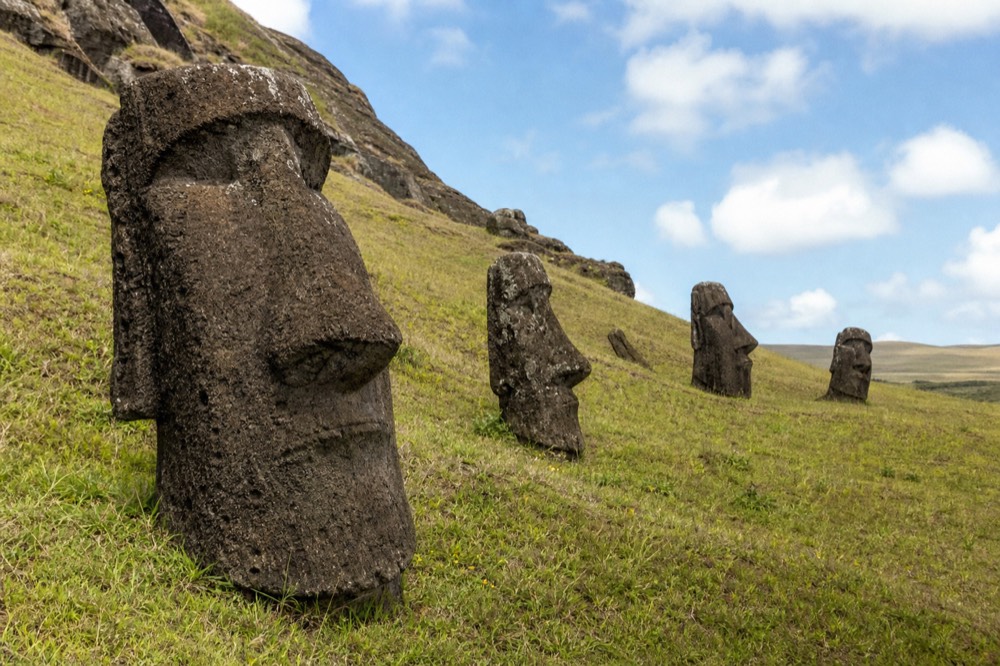
Then there is the "it's just heads" problem. The heads have bodies, most of them buried by centuries of slope wash at Rano Raraku, and the quarry is where the story lives: hundreds of moai at every stage of carving, some still attached to bedrock, one unfinished giant that would have stood around 21 metres had anyone moved it. The tallest ever raised, Paro, reached nearly 10 metres and about 82 tonnes. Roughly 300 ceremonial ahu platforms ring the coast. The full moai explainer covers the carving and transport evidence properly.
What do the days themselves cost once you land?
More than mainland Chile, because almost everything arrives by air. Mid-range dinner runs $20 to $40 a head, a compact 4WD rents at $60 to $115 a day, a scooter at $35 to $50, and a taxi out to Tongariki is $20 to $30 each way. Daily on-island spend ranges from about $43 frugal to $212 at the luxury end.
| On-island cost, 2026 | Level | Notes |
|---|---|---|
| Park ticket, foreign adult | $100 ($40 child) | 10 consecutive days; excluded from many day tours but included in some multi-day packages |
| Guided full day | $100 to $294 per person | Cheapest is the budget group day, dearest is a private archaeology day |
| Taxi, Hanga Roa to Ahu Tongariki | $20 to $30 | Each way |
| Scooter rental | $35 to $50 a day | |
| Rental car, compact 4WD | $60 to $115 a day | Commonly $90 to $114 |
| Mid-range dinner | $20 to $40 per person | Import costs sit on every plate |
| Hostel dorm | $23 to $47 a night | Average around $31 |
| Mid-range hotel double | $45 to $200 and up | Hanga Roa only |
| Campsite | $16 to $20 a night | Around 10,000 CLP where there are facilities |
Notice what the guided-day column does to the self-drive plan. A rental car at $90 covers two people at $45 each, but park sites cannot be visited without a Ma'u Henua-accredited guide, so the car gets you to a gate you cannot walk through alone. That collapses the usual do-it-yourself saving, and once you price a guide separately, the group day at $100 to $120 stops looking expensive.
Does the arithmetic improve if you stay longer?
A longer stay can spread the cost of getting here across more sightseeing days. Add accommodation, food and activities to the comparison, and check the actual return-flight fare: a different return date can change the total.
This is the reverse of how most bucket-list trips price out. Usually the experience is the expensive part and the travel is cheap, so a short visit is the efficient one. Here the access is the expensive part, which means short visits are the wasteful ones. A frugal extra day on the island can land near $43 of spending. That is a rounding error against a $400 flight.
A two-day guided package can spread the sightseeing across both island circuits. If dawn at Tongariki matters to you, a three-day format adds a dedicated sunrise outing to two full-day circuits; compare the time each option needs alongside the extra nights of accommodation.
What is here that exists nowhere else?
Three things, and none of them photograph well. A sky with effectively no light pollution for thousands of miles. A quarry holding hundreds of unfinished statues mid-carve. And a Polynesian community still speaking its own language, cooking curanto in earth ovens and running its own national park.
The night sky is the sleeper. There is no city glow to fight, so the Southern Cross, the Magellanic Clouds and a Milky Way most northern-hemisphere visitors have never actually seen come out hard. Sessions run around the moon calendar, with the clearest conditions from April to October, and the stargazing guide explains why the timing matters more here than the equipment.
The living-culture part is what converts skeptics. Rapa Nui is not a ruin with a caretaker. The Ma'u Henua community administers the park, accredits the guides and sets the rules; conservation crews began treating five of the moai worst burned in the October 2022 Rano Raraku fire in May 2025, work reported in detail by the BBC. Around 80 statues were scorched in that fire and the scarring is still visible. You are not looking at a finished story.
And the archaeology holds up against anything on the UNESCO World Heritage list. The Easter Island Statue Project has inventoried 1,040 monolithic sculptures. Rano Raraku alone still holds hundreds. A 2024 radiocarbon study dated one rongorongo tablet to roughly 1493 to 1509, before European contact, which keeps the possibility of an independently invented script alive.
So who should book, and who should spend the money elsewhere?
Book it if remoteness and archaeology are the point, if you can give the island three days or more, and if you accept wind, rain and a $100 park ticket as part of the deal. Skip it if you want a beach week, if you only have 36 hours, or if you resent paying for access rather than for luxury.
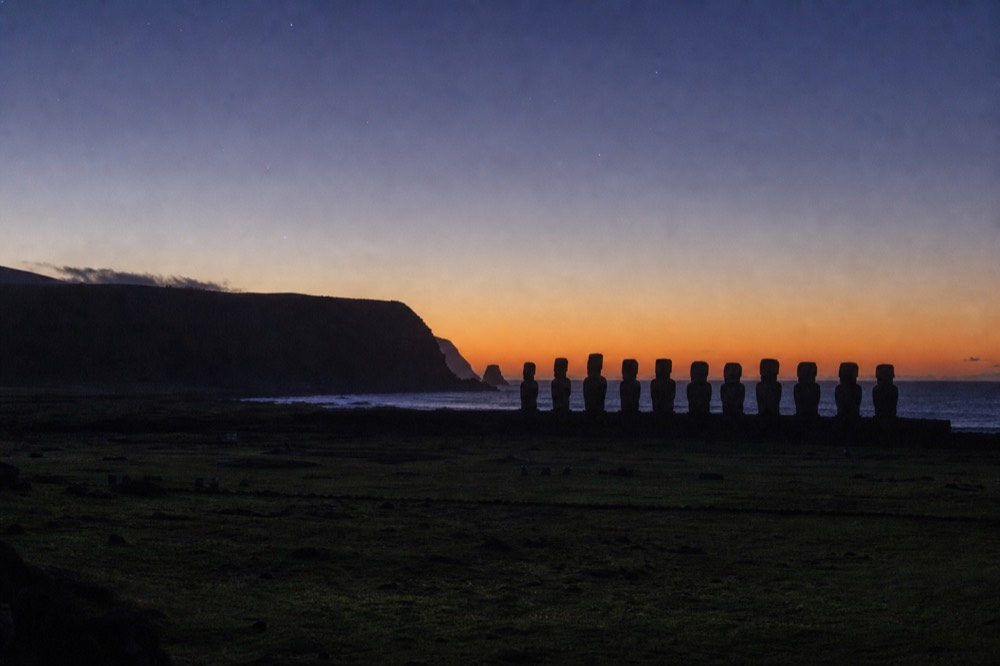
The people who come home evangelical share a profile. They gave it enough days, took a guided circuit rather than trying to outsmart the park rules, and went out to Tongariki once in the dark, when the site opens at 6:00 for dawn visitors and the sun comes up between roughly 6:30 in high summer and 7:30 in winter. The photographs from that hour are the ones that end up framed.
A rushed visit can leave little time for the sites that drew you here. The full trip-cost breakdown walks through the money in detail, and the Easter Island tours lineup compares formats. Allow enough time for the routes that interest you, and settle the sightseeing plan alongside the flights.
Match The Day To Your Plans And Compare Costs
Editorial starting point. Confirm your party's age, access needs and departure details on the listing.
Two Island Circuits And Tongariki Sunrise: Two full-day circuits plus a separate Tongariki sunrise outing. Booking details: Park admission, food, flights and accommodation are not included. Moderate fitness required; confirm the order of outings. Three-day span
Four-Day Island Package With Lodging: Three hotel nights, guided excursions in English/Spanish, park admission, three breakfasts and one lunch. Booking details: Flights, airport taxes and other meals are extra. Non-refundable. Confirm named hotel, room and registration before booking. 4 days
Compare Your Actual Quotes
Use totals for the same party and the same itinerary in one currency. Include guide, transport, admission and meals where relevant. These are your quotes, not live prices.
Match the same experience, dates and party. Compare guide and vehicle time, admission, meals and cancellation terms. A price difference alone does not establish equivalent value.